Why Wear Your Jewels When Your Handbag Can?

Fine jewelry has traditionally belonged to the body: diamonds at the throat, gemstones wrapped around the wrist, brooches pinned neatly to a lapel. But a new generation of designers is challenging that convention, transforming precious stones into luxurious accents designed to adorn something else entirely—the handbag.
The idea arrives at the perfect moment. Bag charms have become one of fashion’s most visible forms of personalization, turning even the most recognizable designer handbag into something distinctly individual. Now, fine jewelers are elevating that impulse, replacing playful trinkets with diamonds, colored gemstones, precious metals, and intricate craftsmanship.
The result sits somewhere between jewelry and objet d’art.

From Bag Charm to High Jewelry
There is an important distinction between the ubiquitous bag charm and this new breed of accessory. These pieces aren’t simply decorative key chains rendered in more expensive materials. Many are conceived and constructed according to the standards of fine or even high jewelry.
Dubai-based jewelry designer Ashna Mehta, for example, has helped push the concept into decidedly extravagant territory with her Bag Bijoux creations. One remarkable design, Gilded Bloom Haute Bag Bijoux, centers on a 36.89-carat natural fancy intense yellow cushion-cut diamond surrounded by kite-shaped and rose-cut diamonds. The jewel won the Haute Couture category at the 2026 Couture Design Awards.
Other designs blur the boundaries even further by being convertible, allowing a jeweled handbag accent to become a pendant or brooch. Rather than spending its life waiting inside a jewelry box for a formal occasion, the piece can move between fashion and fine jewelry.
That versatility reflects a larger shift in how consumers think about precious stones.
Diamonds Are Leaving the Jewelry Box
For generations, significant diamonds and gemstones have been associated with milestone jewelry—engagement rings, anniversary pieces, important necklaces and heirloom brooches. Increasingly, designers are asking why those stones should be confined to traditional categories.
A handbag offers an unexpectedly compelling setting.
Against smooth black leather, diamonds become intensely graphic. Emeralds bring dramatic contrast to burgundy or chocolate brown. Sapphires can transform a neutral handbag with a flash of saturated blue, while pink and yellow diamonds introduce color without sacrificing the rarity associated with exceptional stones.
The handbag essentially becomes the backdrop, much as a black evening dress might showcase a spectacular necklace.
There is also something appealingly irreverent about attaching an extraordinary jewel to an everyday object. A diamond doesn’t become less precious because it is worn differently. If anything, placing it somewhere unexpected draws greater attention to the stone itself.
Jewelry Becomes Personal Again
The larger bag-charm revival has been driven partly by a desire to make luxury feel individual. After years dominated by understated minimalism and “quiet luxury,” accessories have become more expressive. Charms, scarves, brooches, beads and personal talismans are appearing across fashion, allowing the wearer to alter familiar pieces rather than constantly replace them.
Fine jewelry is particularly suited to this idea because gemstones already carry associations with personality, memory and symbolism.
A birthstone can make a handbag jewel personal. An antique diamond might be reset into a contemporary charm. A gemstone collected while traveling could eventually become part of a custom piece. Initials, zodiac symbols, animals, flowers and protective motifs can transform precious materials into something that feels less like a conventional status symbol and more like a personal signature.
And because many of these pieces can migrate from handbag to necklace, jacket or lapel, the jewel itself becomes more adaptable.
The Handbag as a New Jewelry Canvas
The convergence of handbags and jewelry isn’t limited to detachable charms. Jewelry houses are increasingly bringing their design vocabulary directly into bags. Cartier, Bvlgari and Buccellati are among the maisons exploring increasingly jewel-like handbags, while Cartier’s new Clash de Cartier bag incorporates clasps derived from the studs of its fine-jewelry collection.
It points toward an interesting future for luxury: the distinctions between jewelry, fashion and accessories are becoming less rigid.
A brooch doesn’t necessarily have to remain a brooch. A pendant doesn’t always need a chain. And a remarkable gemstone doesn’t have to wait for an evening gown before leaving the safe.
For jewelers, that creates an entirely new landscape for design. Clasps, handles, straps and hardware can all become potential settings for precious stones. For collectors, it creates another way to enjoy the gemstones they love.
After all, fine jewelry has always been about more than where a jewel is worn. It is about craftsmanship, beauty, rarity and the pleasure of living with something extraordinary.
So perhaps the question isn’t whether diamonds belong on your handbag.
It’s why we didn’t put them there sooner.
About The Author

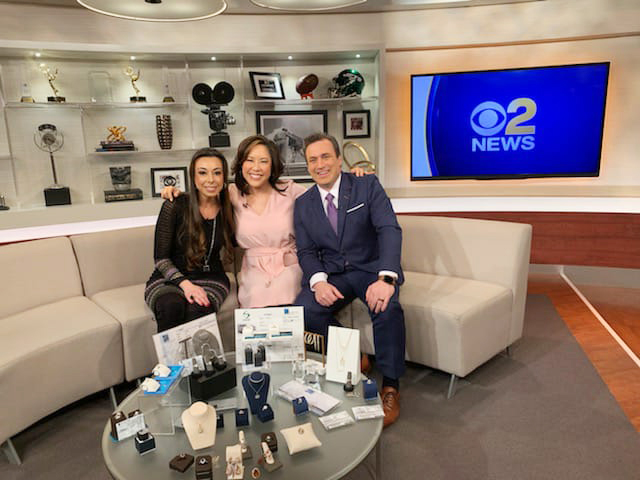
Debbie Azar is the Co-Founder and President of Gemological Science International (GSI), one of the largest gemological organizations in the world, and a distinguished leader in the global diamond and jewelry industry. As an executive with extensive knowledge of the jewelry and gem lab industries, her entrepreneurial skills and vision have helped GSI achieve rapid and continuous growth worldwide, establishing 13 leading-edge gemological facilities on four continents. She currently serves on the boards of the Jewelers Vigilance Committee, Responsible Jewellery Council, and Jewelers for Children, and is a member of the 24 Karat Club of New York. She has been featured in Forbes, Daily Mail, Good Morning America, Bloomberg, Bloomberg Businessweek, Fox Business, Fox5, CBS2, BOLDTV, Varney&Co, The Street, and NASDAQ, among others.